Don't Trust the "Gurus": Why Influencers Want You to Buy Their Bags
YouTube, TikTok, and Twitter are flooded with crypto experts who claim to know the next token that will "moon" (increase 100x in value). They show off charts, whitepapers, and confident predictions.
12/15/20251 min read
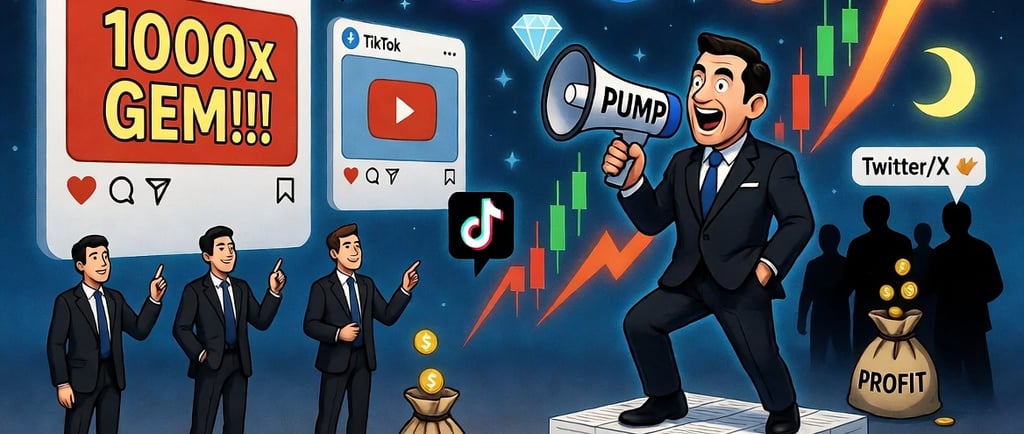
YouTube, TikTok, and Twitter are flooded with crypto experts who claim to know the next token that will "moon" (increase 100x in value). They show off charts, whitepapers, and confident predictions. Remember one golden rule: In crypto, if someone is shouting loudly about a project, they usually have a financial incentive to do so.
1. The "Pump and Dump" Scheme
This is market manipulation 101.
Phase 1 (Accumulation): An influencer or group buys a large amount of a cheap, low-volume token quietly.
Phase 2 ( The Pump): They release a video or tweet thread: "This project is the future! Massive potential!" Their thousands of followers rush to buy, driving the price up sky-high.
Phase 3 (The Dump): While the followers are buying, the influencer sells their tokens at the new high price. The price crashes, and the followers are left holding worthless assets ("bag holders").
2. "Not Financial Advice" (NFA)
You will hear this phrase constantly. It is a legal shield, not a badge of honesty. It psychologically tricks viewers into thinking, "He has to say that, but he's actually sharing insider secrets." Do not be fooled. It literally means: "I take no responsibility if you lose everything listening to me."
3. Paid Shilling
A huge portion of crypto content is paid advertising that isn't disclosed. Projects pay influencers thousands of dollars (often in their own tokens) to create hype. The "honest review" you are watching is often just a commercial script.
Summary:
Treat Crypto Twitter and YouTube as entertainment, not investment advice. Real research happens in documentation and data, not in hype videos. If everyone is talking about it, you are likely the exit liquidity.