Is $1 Always $1? Understanding Stablecoin Risks (De-pegging)
Stablecoins (like USDT, USDC, DAI) are the backbone of DeFi. They are designed to be a boring, safe haven in the volatile crypto market, strictly pegged to the value of $1. However, the collapse of Terra (UST) in 2022 proved that "stable" is just a label, not a guarantee.
11/17/20251 min read

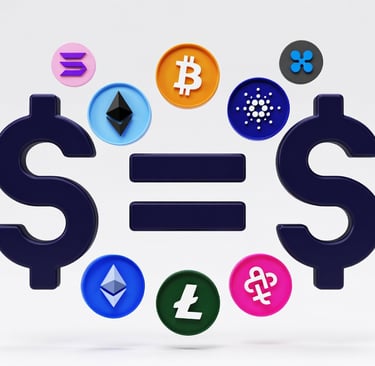
Stablecoins (like USDT, USDC, DAI) are the backbone of DeFi. They are designed to be a boring, safe haven in the volatile crypto market, strictly pegged to the value of $1. However, the collapse of Terra (UST) in 2022 proved that "stable" is just a label, not a guarantee. Holding your life savings in digital dollars carries risks that are fundamentally different from holding cash in a bank.
1. Types of Stablecoins & Risks
Not all stablecoins are created equal. You must understand what backs the token in your wallet.
Fiat-Backed (e.g., USDC, USDT): These are issued by centralized companies that claim to hold $1 in cash or bonds for every token issued.
Risk: If the company's bank fails (like Silicon Valley Bank) or if regulators freeze their assets, the token can lose value ("de-peg").
Algorithmic (e.g., USDe, DAI - partly): These use complex code and game theory to maintain stability without holding physical cash.
Risk: If the market crashes violently, the algorithm can enter a "death spiral," driving the value to zero, as seen with Terra/Luna.
2. What is De-pegging?
De-pegging happens when the price of a stablecoin drops below $1.00 (e.g., to $0.90 or $0.85).
The Panic Cycle: When a peg breaks, fear spreads instantly. Traders rush to sell the stablecoin for other assets, pushing the price down further.
The Opportunity vs. Trap: While major stablecoins (like USDC) usually recover their peg after the panic subsides, there is never a guarantee. Buying a de-pegged coin is a gamble, not an investment.
3. Pro Tip: Diversify Your Stables
Don't keep 100% of your "dry powder" in a single stablecoin. Split it among the top trusted issuers (e.g., 50% USDC, 30% USDT, 20% DAI). This protects you if one specific issuer faces a crisis.
Summary:
Treat stablecoins as a transactional tool, not a long-term savings account for your entire net worth. If you don't need the money on-chain, consider keeping it in a regulated bank or cold storage Bitcoin.